

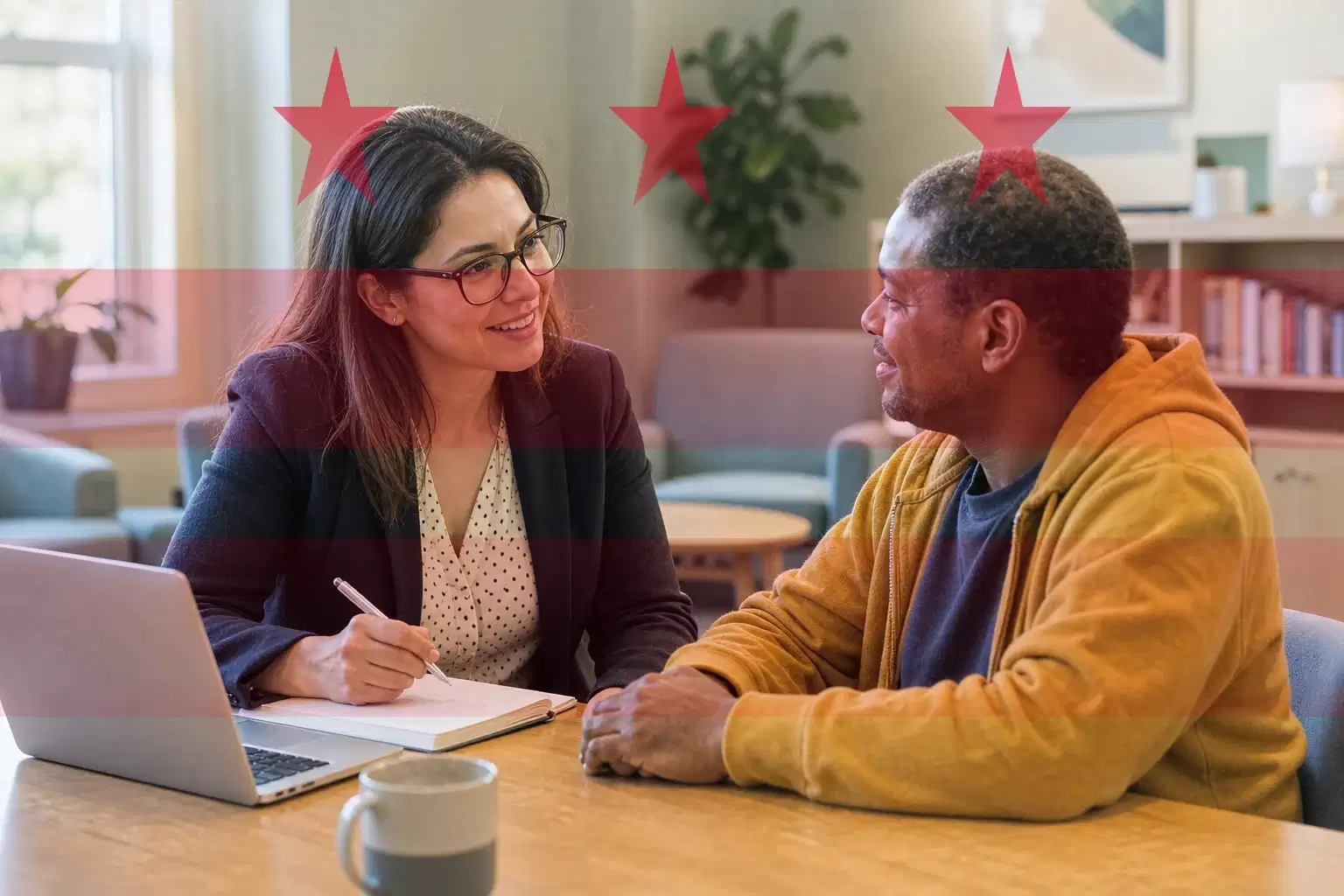
From Red Tape to Recognition: How DC Opened a New Human Services Training Pathway for Experienced QIDPs
July 27, 2026
Posted by
Training & eTracking Solutions
Imagine spending ten years — sometimes twenty — as a Qualified Intellectual Disabilities Professional, coordinating supports, leading interdisciplinary teams, and improving lives every day, only to be told you don't have the right paperwork to keep doing your job. That was the reality facing experienced QIDPs across the District of Columbia. This is the story of how a coalition of providers, a state agency willing to innovate, and a modern learning platform came together to build a better path.
The Problem: Experience That Didn't Count on Paper
In February of 2025, Ian Paregol, Executive Director of the DC Coalition of Disability Service Providers, reached out to us about an initiative the Coalition was working on. The background: QIDPs who had been Qs for ten or more years were being told that they did not have the appropriate credentials to do their job. Under the credentialing requirements, they faced going back to a university to attain a degree in human services.
The cost of that paper credential was steep. A university human services program could run anywhere from $2,500 to $10,000 per person. Larger providers were looking at paying upwards of $50,000 to certify that professionals who were already demonstrably competent in the skills the role demanded could prove it on paper. For a field already stretched thin by workforce shortages, it was a burden that helped no one — least of all the people receiving supports.
The Breakthrough: New Waiver Language
Everything changed when the District of Columbia submitted new language in its HCBS waiver for IDD supports. The revised waiver carved out a path for a continuing education program "equivalent to a minor in human services" to substitute for a university human services minor. Suddenly, there was a way for experienced professionals to earn the credential without stepping away from their careers or taking on thousands of dollars in tuition.
As the Coalition and DC's Department on Disability Services (DDS) worked to solidify this option, Training and eTracking Solutions began creating an initial curriculum. We spoke with both qualified professionals in the field and academic experts in human services to put together a program that was appropriate in both breadth and depth. Just as important, we designed it to be something human service professionals could realistically balance with the everyday demands of their profession.
The Final Curriculum: Seven Weeks, University Rigor, Real-World Focus
The finished program is a seven-week, cohort-based course that moves from the history and structure of human services systems into the daily practice skills the QIDP role demands:
- Foundations and History — deinstitutionalization and the rise of community-based care
- Funding Systems — Medicaid, Medicare, and how HCBS waivers actually work
- Models of Care — the medical model versus the social model, taught through a faculty-led recorded lecture, guided readings, and discussion
- Person-Centered Supports — putting the individual at the center of planning and practice
- Populations and Service Systems — the range of people and systems human services professionals encounter
- Ethics, Documentation, and Professional Practice — the professional judgment that separates good intentions from good outcomes
- Capstone — a case-based final assessment that ties every week together into one applied scenario
Each instructional week combines narrated multimedia lessons with guided readings and a threaded class discussion, where learners post their own analysis and respond to peers — the same give-and-take you'd find in a university seminar. Scored knowledge checks throughout the program hold learners to a rigorous passing standard, and the capstone asks them to apply funding rules, care models, person-centered planning, ethics, and documentation to a realistic case before they complete the program.
The Technology: A Modern Classroom, Online
As our team was building out the new TeTS Platform, this curriculum became its first real test. A program equivalent to a university minor can't be a stack of slideshows — it needed to support multimedia and discussion-based learning in addition to classic e-learning modules, plus a final assessment to verify competency.
The platform delivers narrated, interactive e-learning modules alongside streaming video lectures, downloadable course readings and study guides, and threaded discussion boards where the cohort learns from one another week by week. Progress, quiz scores, and completions are tracked automatically, so learners always know where they stand and administrators have a clean record of every requirement met. The experience is consistent with what a learner would expect in a modern classroom — just available on their schedule, from anywhere.
Approval — and an Overwhelming Response
As the technology and curriculum came together, the last hurdle was approval. With the waiver language intentionally broad, we sought approval directly from DDS — and after a few conversations, attained it in late May of 2026.
Then came sharing the new offering with the community, and the response was overwhelming. The first cohort saw 40 different learners apply, enroll, and complete the class — experienced professionals who can now prove on paper what they've been proving in practice for years.
Congratulations to every member of the first cohort. You balanced a demanding profession with a rigorous course of study, and the people you support are better for it.
A Model for Other States
Training and eTracking Solutions strongly encourages other states to seek similar pathways — to reduce red tape and empower individuals to pursue career paths where experience and high-quality online coursework can supplant the knowledge that would otherwise have been gained at a university. The workforce crisis in human services is real, and credentialing barriers that ignore demonstrated competence only make it worse.
We continue to believe that the future of education is modern online learning — and our platform and our team are the engine built to support that future. If your state, agency, or provider network is exploring a similar pathway, we'd love to talk.